Subcontractor Safety Orientation: Map Hazards First
A site orientation protects workers only when it covers physical ground, live panels and real tie-off points before trade work starts.
Log site safety before work begins: the site team, safety notes and checklists, filed against the job. The form is built from a template your company controls.
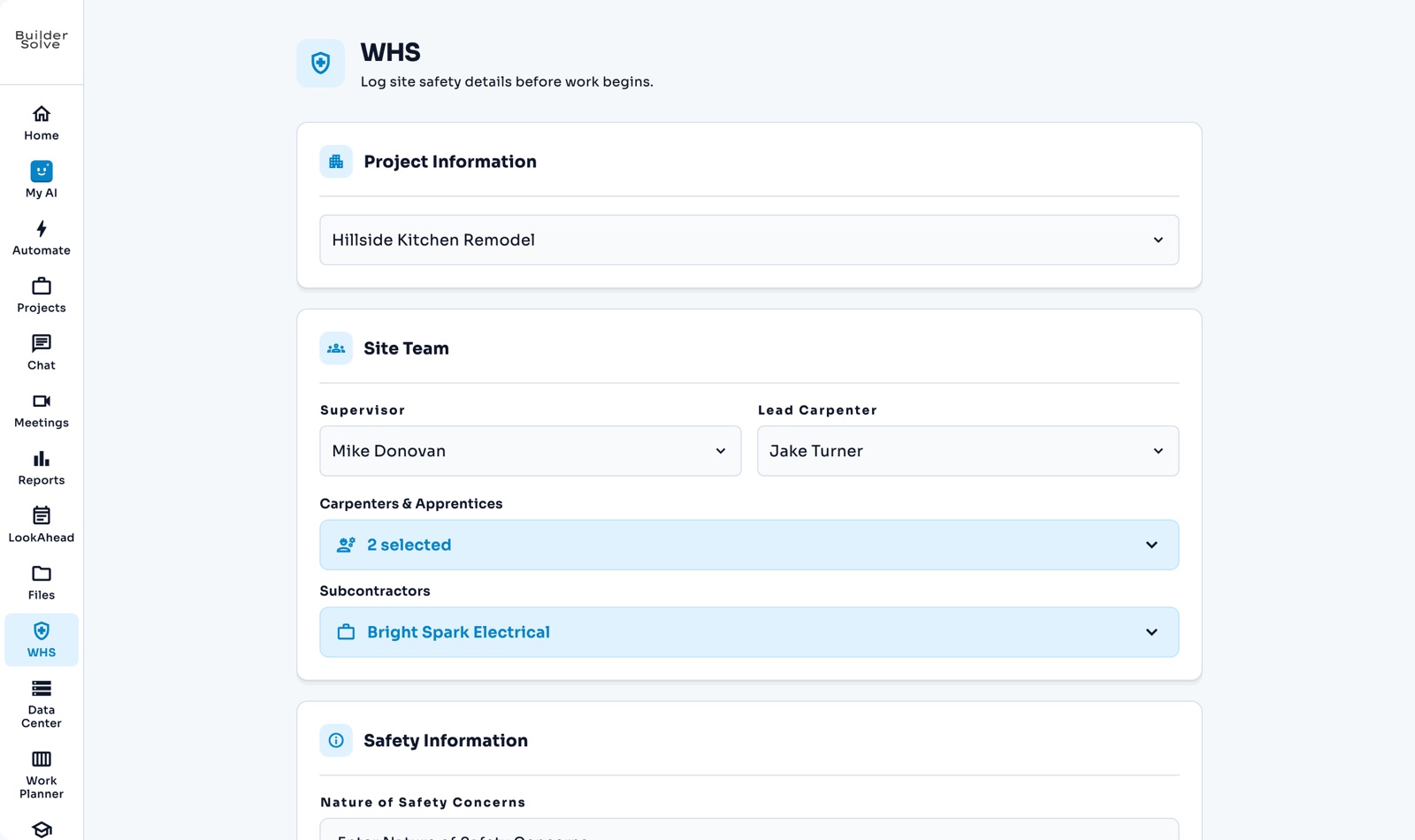
Every report is saved with that job’s records.
Supervisor, lead carpenter, carpenters and apprentices, and subcontractors on site.
Safety and tools and materials checklists, ticked only for what was actually checked.
Add checklist items and whole sections in Company Settings, and rename the labels to match your crew.
A site orientation protects workers only when it covers physical ground, live panels and real tie-off points before trade work starts.
Crews tell you about the close calls only when telling you is fast and safe, and every long form or disciplinary follow-up teaches them to stop.
Work completed is the easy half of a daily log — the half that matters later is the trade that didn't come and the wall that sat waiting on an answer.
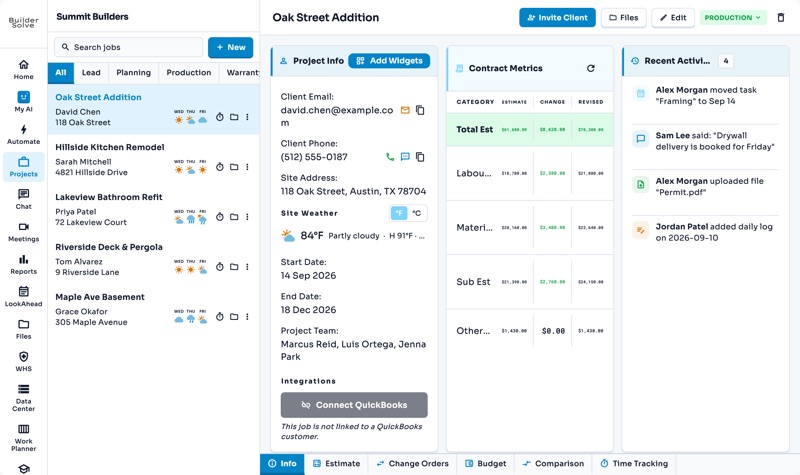
The whole job on one page: client, site, contract, team and schedule.
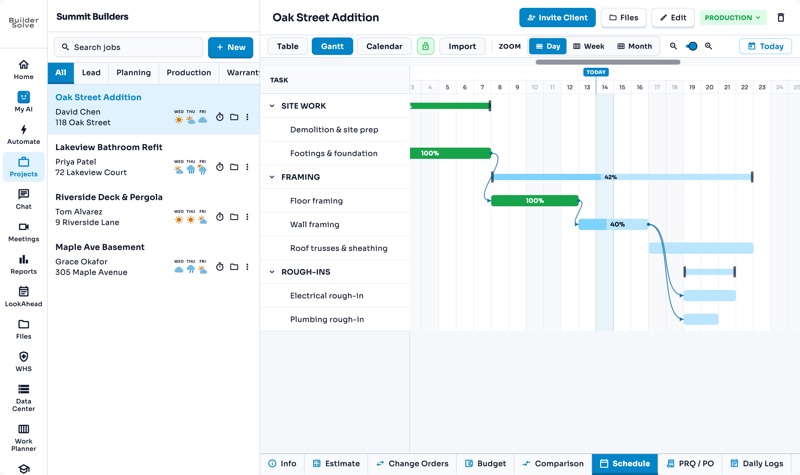
Table, Gantt and calendar views of every job’s tasks, with delays that flow through.
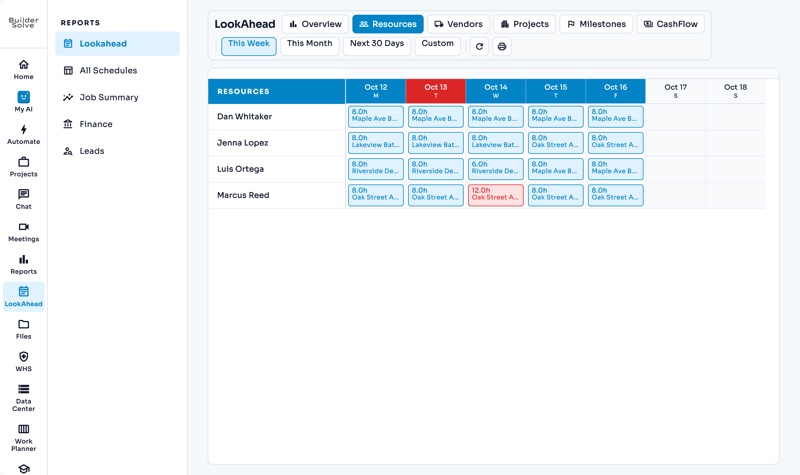
The year ahead across every job: cash flow, upcoming AR & AP, and who is booked where.
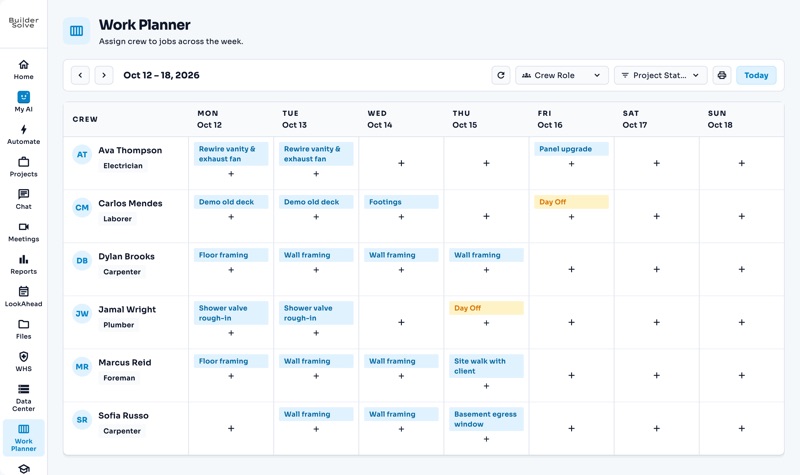
Put each person on a job and task, day by day, on one board.
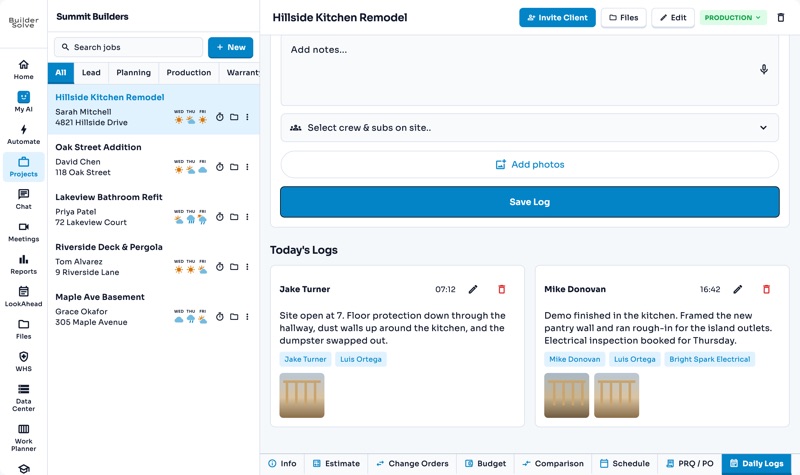
What got done, who was on site and photos of the work, one day at a time.
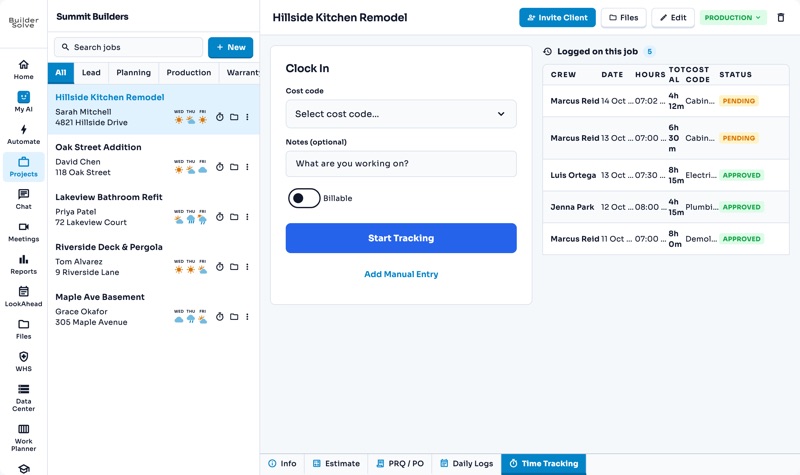
Clock in against a cost code, and every hour lands on the right job and line.
Every feature is in the trial, with your data, from day one.